Reducing the Risk
Dental caries is the most common chronic disease of childhood, despite efforts to improve access to care. Children experiencing poverty and minority racial and ethnic groups generally have higher rates of caries and have less access to treatment.
Untreated caries can lead to local and systemic complications, such as:
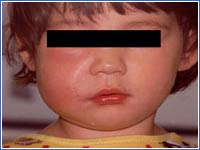
- Infections (Dental abscess, facial cellulitis, brain abscess)
- Pain
- Difficulty eating, poor nutrition and physical development
- Nutrition and growth changes
- Sleep dysfunction
- Poor self-esteem
- Absenteeism from school, declining performance
- Decreased quality of life
- Lifelong dental problems
Caregivers can decrease their own caries levels by:
- Receiving regular comprehensive dental care, including during pregnancy
- Limiting the amount of sugar and simple carbohydrates in the diet and snacks
- Maintaining excellent oral hygiene by brushing twice daily with a fluoridated toothpaste and cleaning between the teeth daily
- Using preventive agents, such as prescribed mouth rinses, toothpastes, and Xylitol-containing products (gums, lozenges)
Facial Cellulitis
References
National Institute of Dental and Craniofacial Research. Oral Health in America: Advances and Challenges. National Institutes of Health, Dec 2021, https://www.nidcr.nih.gov/research/oralhealthinamerica. Accessed 29 July 2026
Douglass JM, LI Y, Tinanoff N. Systematic review of the association between mutans streptococci in primary caregivers and mutans streptococci and dental caries in their children. Pediatric Dentistry 2008, 30(5):375-387.
American Academy of Pediatric Dentistry. Guideline on Perinatal Oral Health Care. Revised 2011. 33(6): 118-123.
Caries Risk Assessment and Management. July18, 2023. https://www.ada.org/resources/ada-library/oral-health-topics/caries-risk-assessment-and-management.